
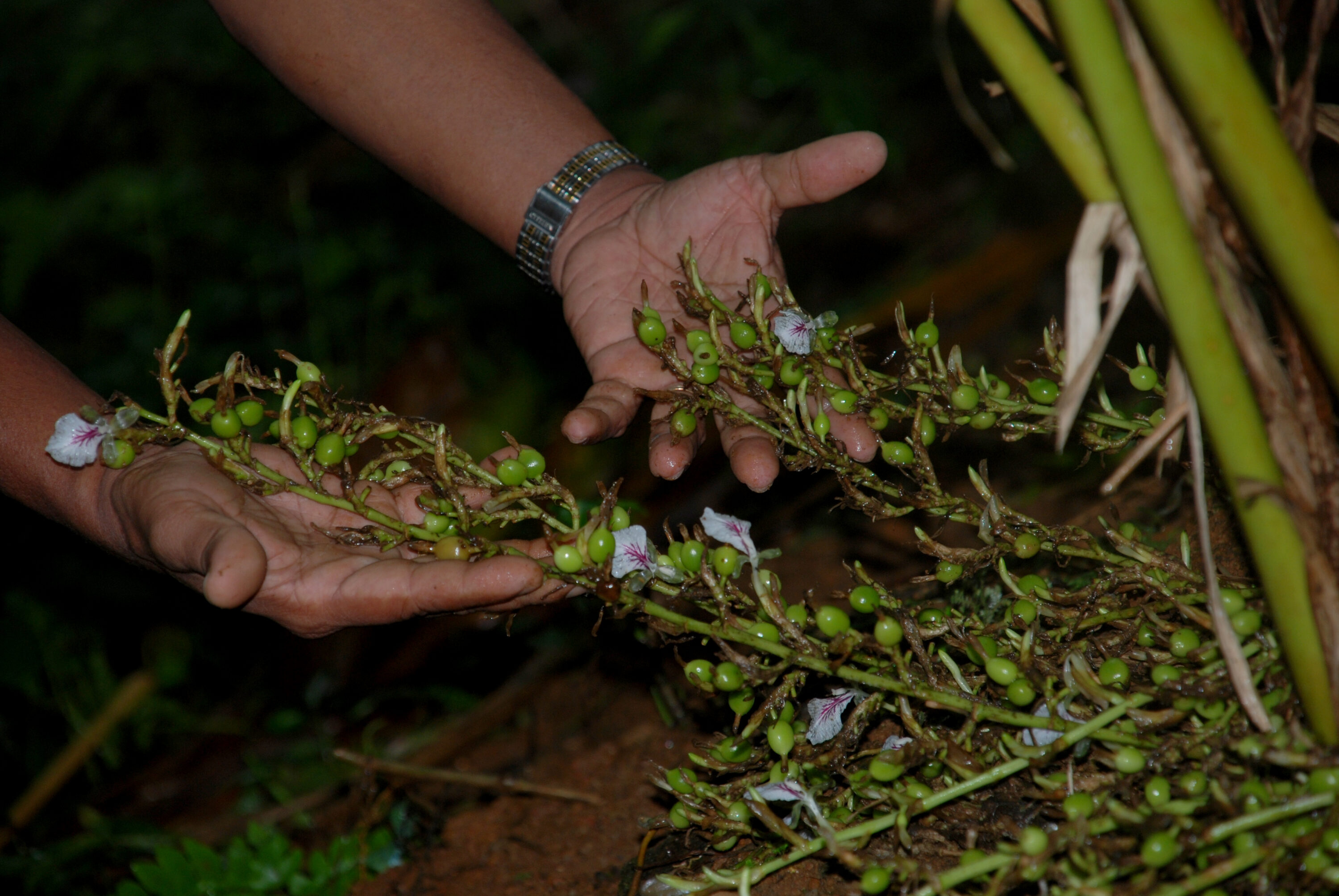
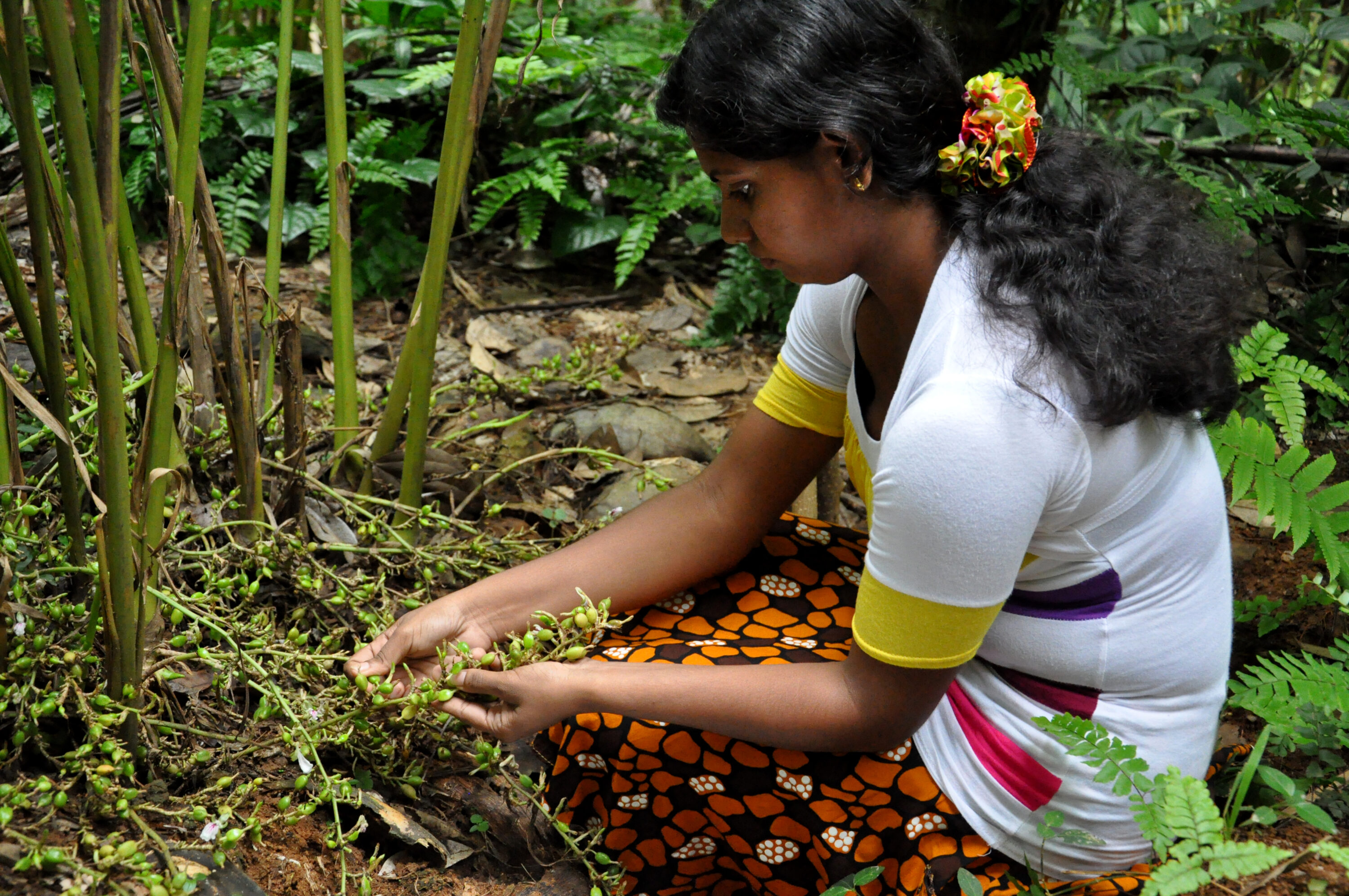
Cardamom, known as the “Queen of Spices” is a perennial herbaceous plant with a pseudo stem and thick irregular shaped rhizomes. Cardamom grows wild in the Western Ghats of Southern India. Many historical texts mention cardamom as a flavouring and medicinal crop. The medical compendium Charaka Sanhita written between the 2nd centaury A.D. refers to it as an ingredient in some drug preparations. Cardamom is also mentioned in Sanskrit texts of the 4th centaury B.C. in a treatise on politics called Kautilaya’s Arthasashasthra and in Taitirriya Samhitha where it is used in offering during ceremonies. In the 11th century in Indian cardamom was included in the list of ingredients for panchasugandha-thambula or five-fragrance betel chew in the Monasollasa or book of Splendour. It was also included in recipes from the court of Sultan of Mandu dating from about 1500 A.D. Cardamom was brought to an article of international trade by Arab traders and according to the Portuguese traveler Barbosa, in 1524 the international trade of cardamom was well developed.
Linschoten, in his Journal of Indian Travels (1596), describes two forms of cardamom used in South India (Watt, 1872).
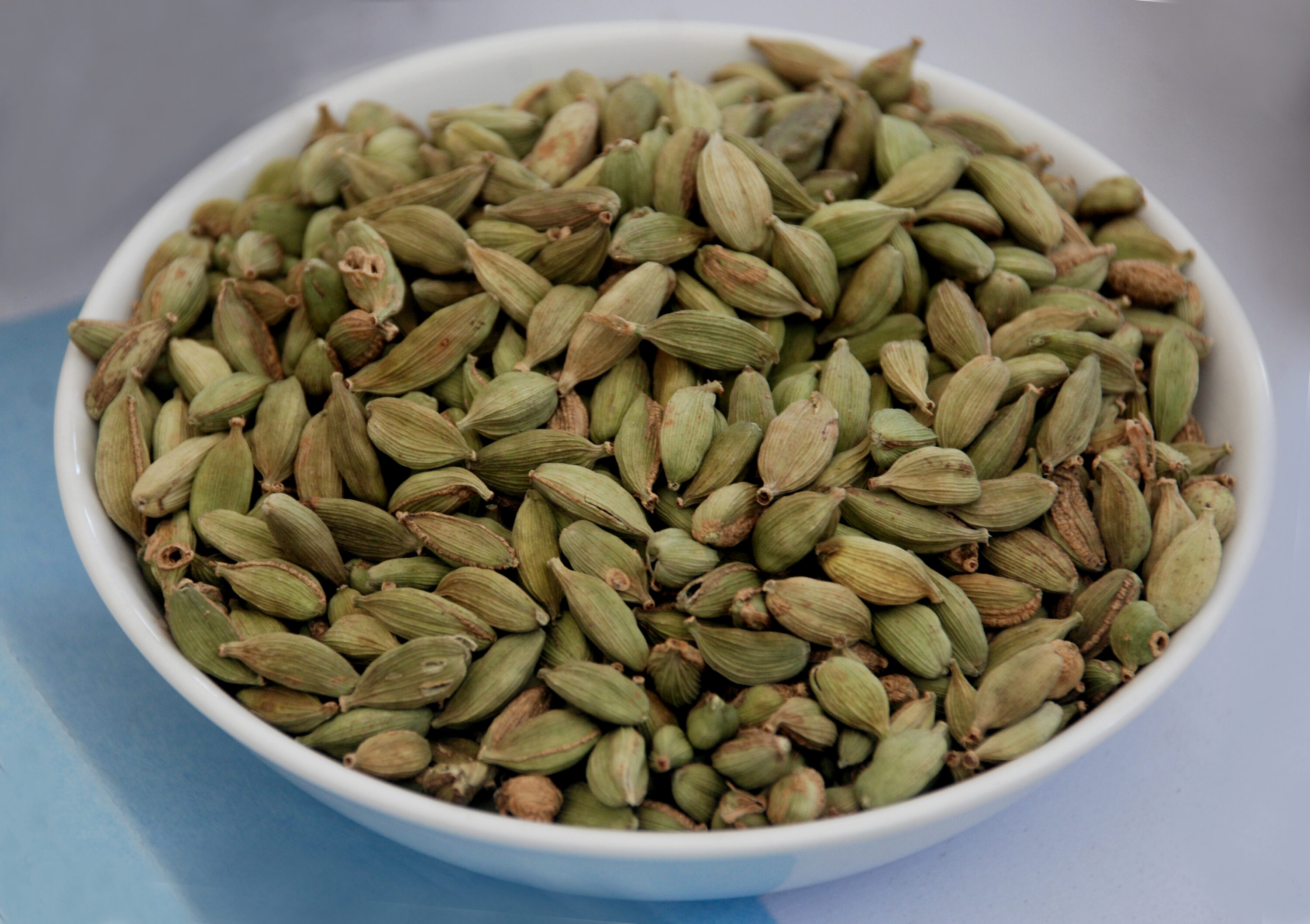
Dried fruit or Cardamom capsule is the commodity of trade. Cardamom can be found as whole cardamom, cardamom seeds and ground form. It is also used in the extraction of oil and oleoresin. Cardamom is mainly used in the food industry as a flavoring agent in curry or meat dishes, sweets, confectionaries, in bakery products, and as an ingredient of curry (masala) powder. Cardamom Oil is used for flavoring of beverages and drinks such as coffee and tea.
It is also used in Ayurveda and Chinese medicine as a powerful aromatic, stimulant, carminative, stomachic, and diuretic.
Can be found in central hill country of Sri Lanka where elevation is 600M. In Sri Lanka cardamom is found in the agro ecological regions of the wet and intermediate zones of up country. Kandy, Matale, Kegalle, Nuwara Eliya, Rathnapura and a part of Galle are the major growing districts.
Varieties
Three types of Cardamom are found in Sri Lanka and they categorized based on the shape of the inflorescence.
| Malabar | Mysore | Vazhukka |
Elevation of planting | 600-900m | 900-1350m | 800-1300m |
Fruiting branches (panicles) | Prostrate | Erect | Semi erect |
Capsule | Round | Elongated | Elongated |
Leaf under surface | Silky | Coarse | Coarse |
Height | 2.5 -3.0m | 3.5- 4.5m | 3.5-4.5m |
Soil
Well drained deep loamy and loamy clay soils with high organic matter (>5%) with good litter mulch are preferable. Water logged or eroded soils are not suitable. Soil pH ranged from 4.5 to 6.0.
Climate
Elevation- must be over 600M. Hilly areas of wet zones of up country and mid country are most preferable.
Rain fall
well distributed rainfall between 1500 – 2500mm per annum.
Nearly 60% shade is essential factor for cardamom. Hence it is commonly grown under natural forest cover.
Temperature – Most favored temperature is 10-25 0C
Planting material
Cardamom can be propagated both through suckers and seedlings. But suckers are better and commonly used. Suckers in 6-10 cm length with apiece of rhizome of about 8-10cm long are used and they should be dipped in a copper base fungicide before planting to protect from fungal disease.
Field planting
Planting points – 2000/ha
Size of a planting pit should be 60 cm x 60cm x 45 cm and pits are filled with mixture of compost and top soil. Add 100g of rock phosphate to each pit. Suckers should be planted 5cm below the ground level.
Components of the mixture | Parts by weight | Nutrient in the mixture |
Urea (46%N) | 4 | 16%N |
Rock phosphate ( 28 % P2O5) | 4 | 10% P2O5 |
Muriate of potash (60% K2O) | 2 | 11% K2O |
Kieserite (24%MgO) | 1 | 2%MgO |
Age of plantation | Maha Season (mixture Kg/ha.) | Yala Season (mixture Kg./Ha.) |
1st Year (kg) | 100 | 100 |
2nd Year (kg) | 200 | 200 |
3rd Year and onwards (kg) | 350 | 350 |
Soil moisture conservation
Particularly in slopes, attention is to be paid to prevent soil erosion by appropriate terracing methods.
Irrigation
Supplementary irrigation during dry spells could increase the yield significantly.
Weeding
Shade regulation
Control
The disease is not wide-spread at present: hence chemical control measures are not recommended.
Harvesting
Cardamom starts to bear at the 3rd year after planting. Cropping season is September to January. Capsules are picked before they are fully ripen and clipped off using scissors. Harvesting is done at 3 to 6 week intervals for around 03 months.
Harvested capsules are washed with water to remove dirt and borer attacked capsules. Capsules should be well drained and dip in a 2% solution of sodium carbonate (washing soda) for 10-15 minutes which may help to retain the green color.
Processing
Drying is done in hot air barns known as ‘Green curing’. Capsules are spread on shallow wire mesh bottomed trays and placed on shelves in the chamber at 45-50oC. Drying process will be over in about 35 – 40 hours in curing chamber. The trays may be racked over and their position interchanged every 10 – 12 hours.
After drying, capsules should be rubbed on wire mesh to remove stalks and then should be winnowed. Final product is stored away from strong sunlight and in black polythene sacks to preserve the color.
Grade | Colour | Splits% | G/Lit. |
Lanka Green | Green | 2 | 370 |
Lanka light green-1 | Slightly light Green | 5 | 340 |
Lanka light green -2 | Light Green | 6 | 320 |
Lanka Bleached | Pale buff | 8 | 300 |
Lanka non specified | Off colour | Non specified | 360 |
Cardamom is well known for its traditional pharmaceutical and food uses. This spice is especially famous for its seed pods with characteristic aroma and taste. Due to well-established gastronomic value and flavoring properties, cardamom is widely used as a flavoring and spicy ingredient in curries and confectionery products.
Due to the presence of a wide array of bioactives and volatile components with multiple activities, such as antioxidant, antihypertensive, gastroprotective, and antibacterial, this spice has significant potential for the development of value-added novel and processed functional foods and nutraceuticals.
Cardamom essential oil has aromatherapy potential is also useful for the digestive system. The major components present in cardamom essential oils are α-terpinyl acetate, 1,8-cineole, and linalool. This chapter focuses on the nutritional and traditional pharmaceutical aspects as well as the food science applications of cardamom, in particular its essential oil.
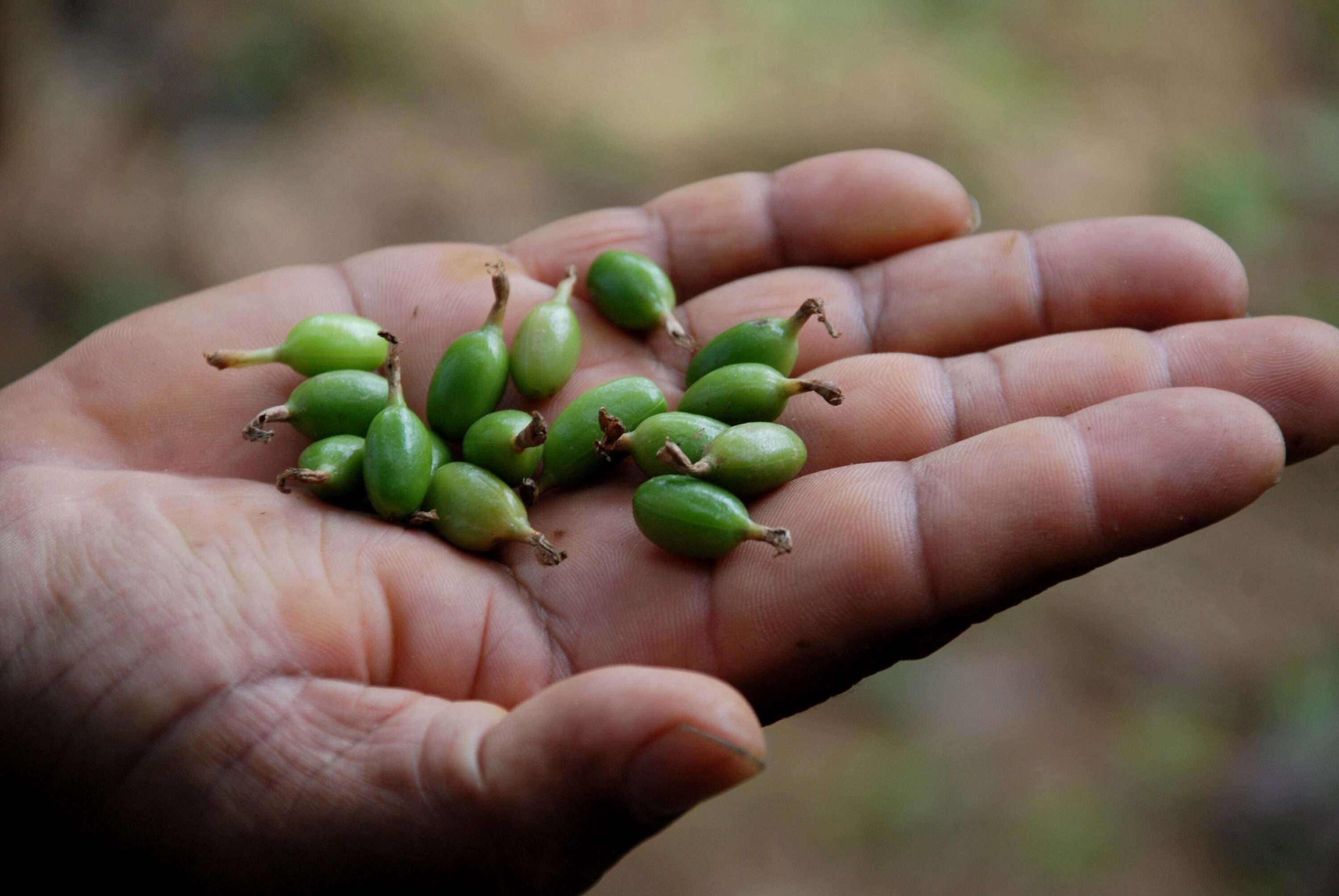
Training and improved planting materials to encourage expansion.