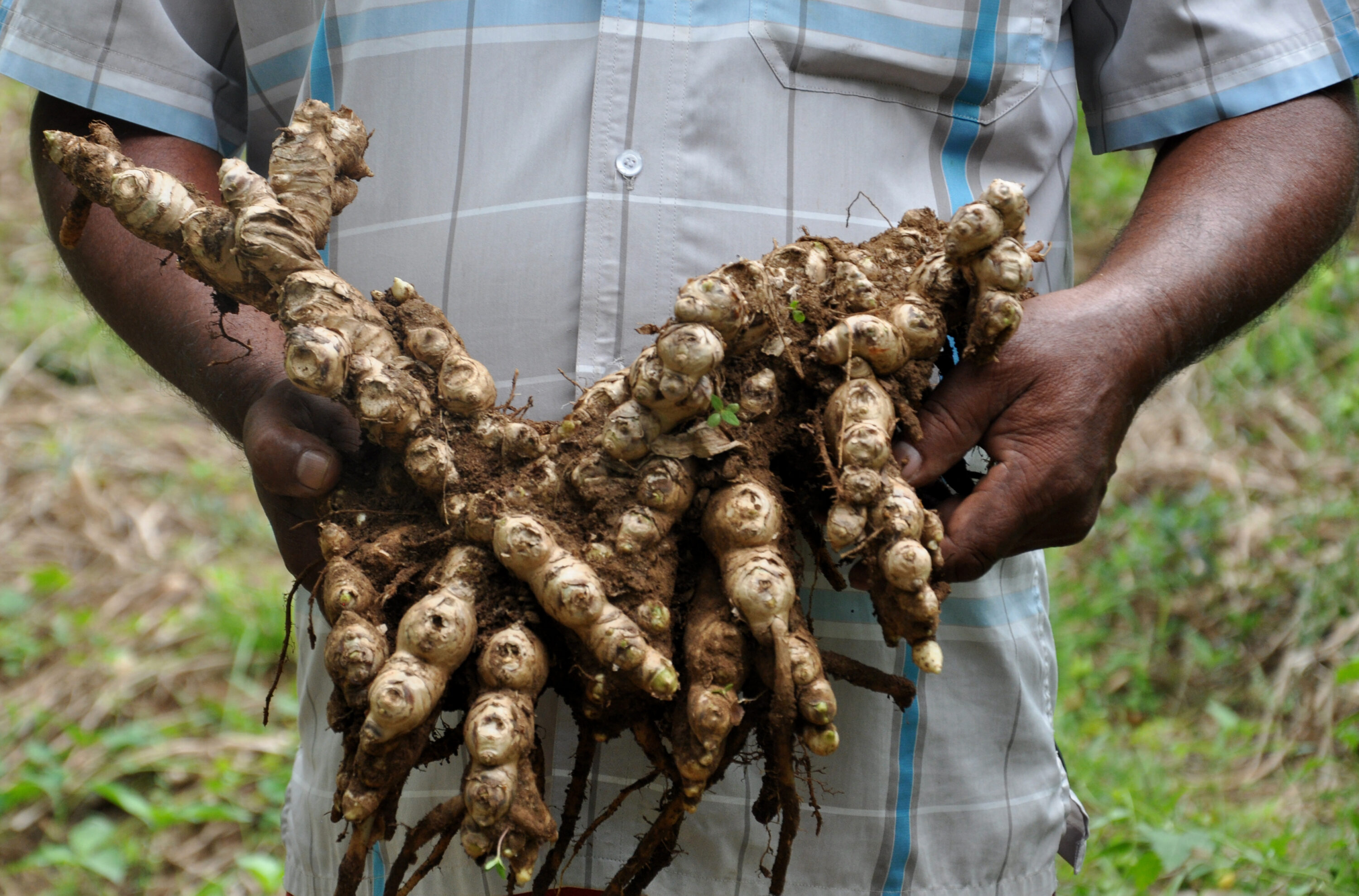
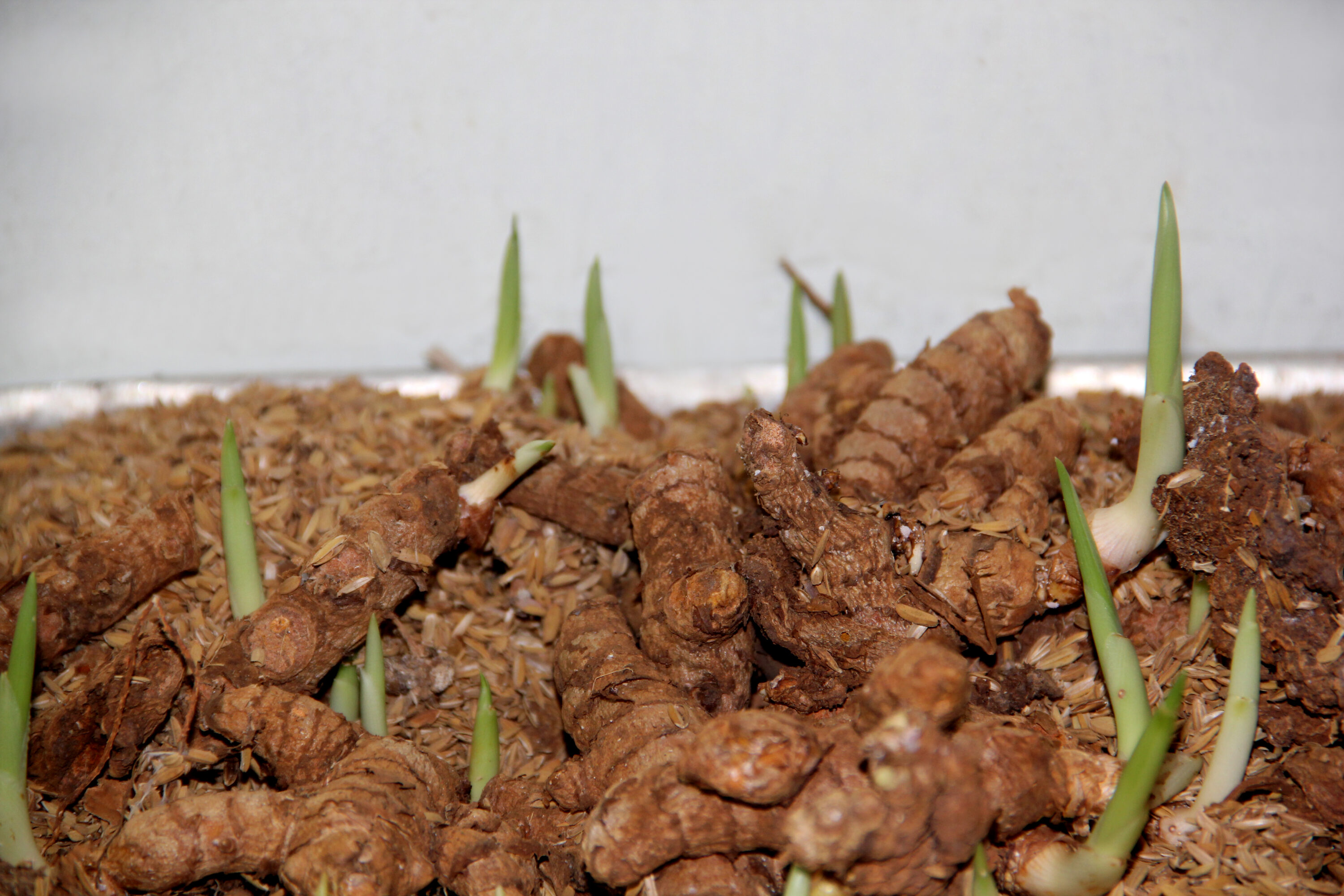
Based on the historic records more than 3000 years, ginger is believed to be originated in East Asia. Ginger has been used as a spice from ancient times. It has been widely used in Chinese and in Ayurvedic medicine. There is information that says at the time of ruling of Emperor Nero the Roman army used ginger as a medicine. It was found that ginger was imported to the European countries as a spice by 1547 A.C. In recent years Ginger has been cultivated as a commercial crop in many countries. Countries such as China, India, Australia, Fiji, Hawai, Hongkong, Jamaica, Japan, Nigeria, Pakistan, West Africa, Taiwan are few countries which cultivate Ginger in a large scale.
Ginger is available in market as fresh ginger or in dry form. Dried ginger is powdered and used for different products. Pickled fresh ginger is popular in East Asian countries and salted and sweetened ginger products are also commonly available in the Asian markets. Ginger oils and oleoresins are used in the food industry as a spice to flavor curries, bakery & other food products and to some extent in the perfumery industry, Also it is a common ingredient in the Ayurvedic medical system till today.
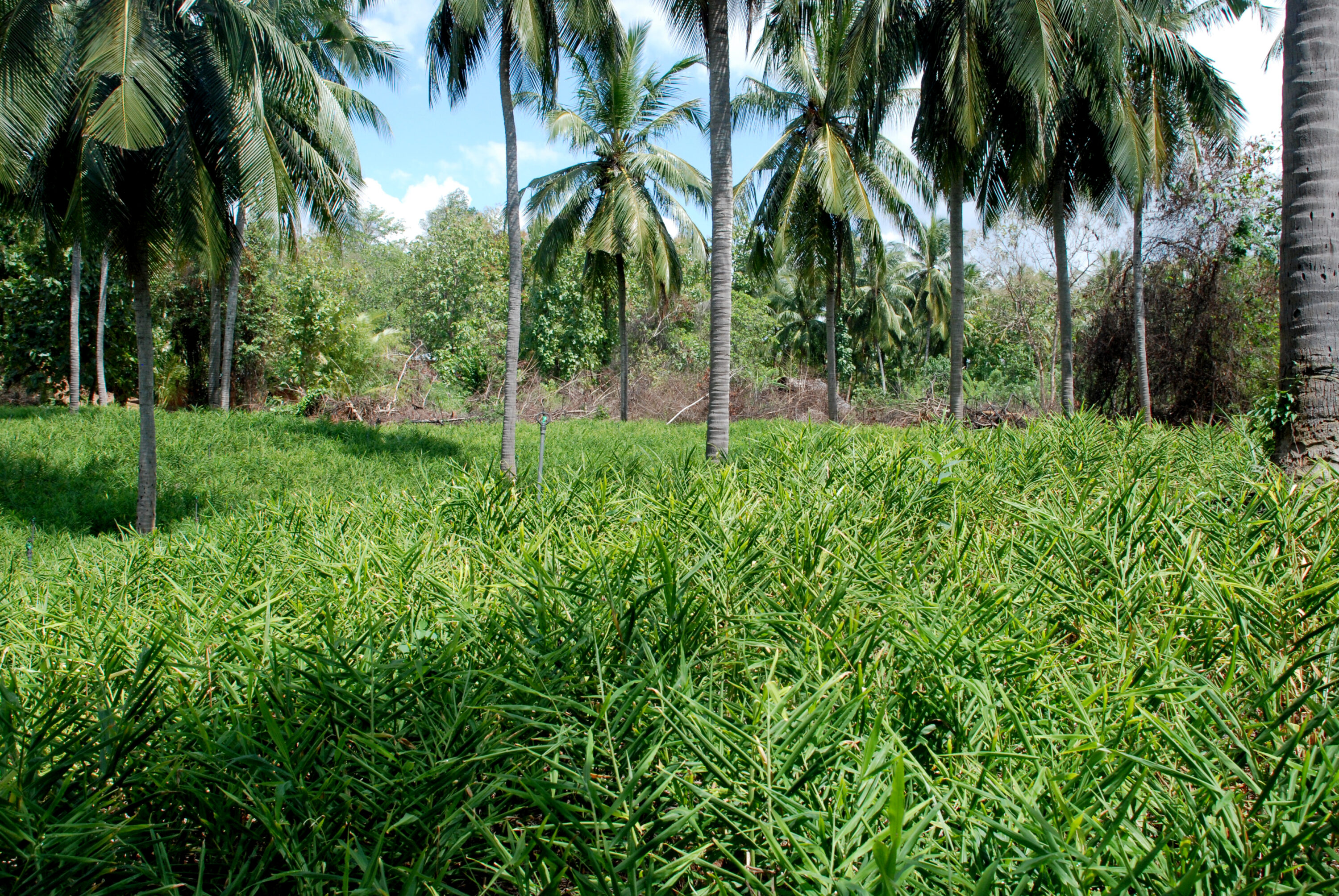
Ginger is grown in all over the country but wet and intermediate zones are major growing areas. Total cultivated extent in 2019 was 1838 ha. Kurunagala, Kandy, Gampaha, Colombo and Kegalle Districts are main growing areas. ginger is largely grown as an inter- crop with coconut and as a home garden crop. Total production in 2019 was 13785 Mt.
Several local and introduced varieties are grown in Sri Lanka in large scale.
Local ginger – Rhizomes are small and the fibrous flesh is somewhat ash white in color. Pungency and aroma are comparatively higher than other ginger varieties. Largely used for beverages
Chinese ginger – Rhizomes are large in size with watery flesh. Flesh is pale yellow in color. The Pungency and aroma is low. Largely used for pickles. Rangoon ginger- Rhizomes are medium in size and with well spreaded finger rhizomes.
Soil
Well drained fertile sandy loam soils are the most suitable soil type.
Climate
Altitude – successfully grown in areas up to 1500 m MSL
Rain fall – Rain fall should be 1500 mm or more. If rain fall is low crop should be grown under irrigation. P.H – should be 5.5 – 6.5
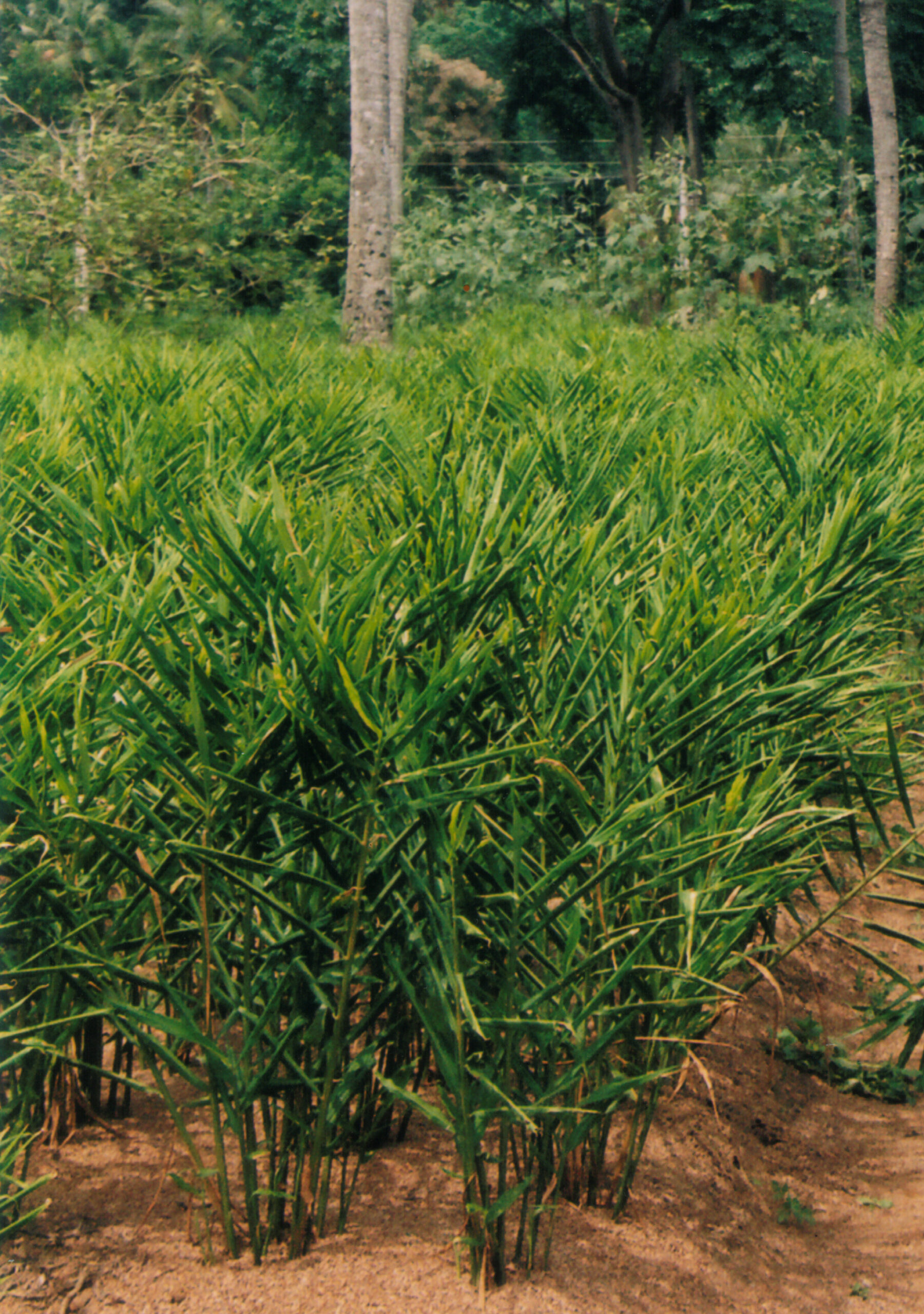
Medium shade is good for the successful growth Ginger is a seasonal crop and the best time to cultivate ginger is between the middle of March and early April. Generally it takes 8-10 months to get yield. However in dry zone areas ginger is cultivated September to October.
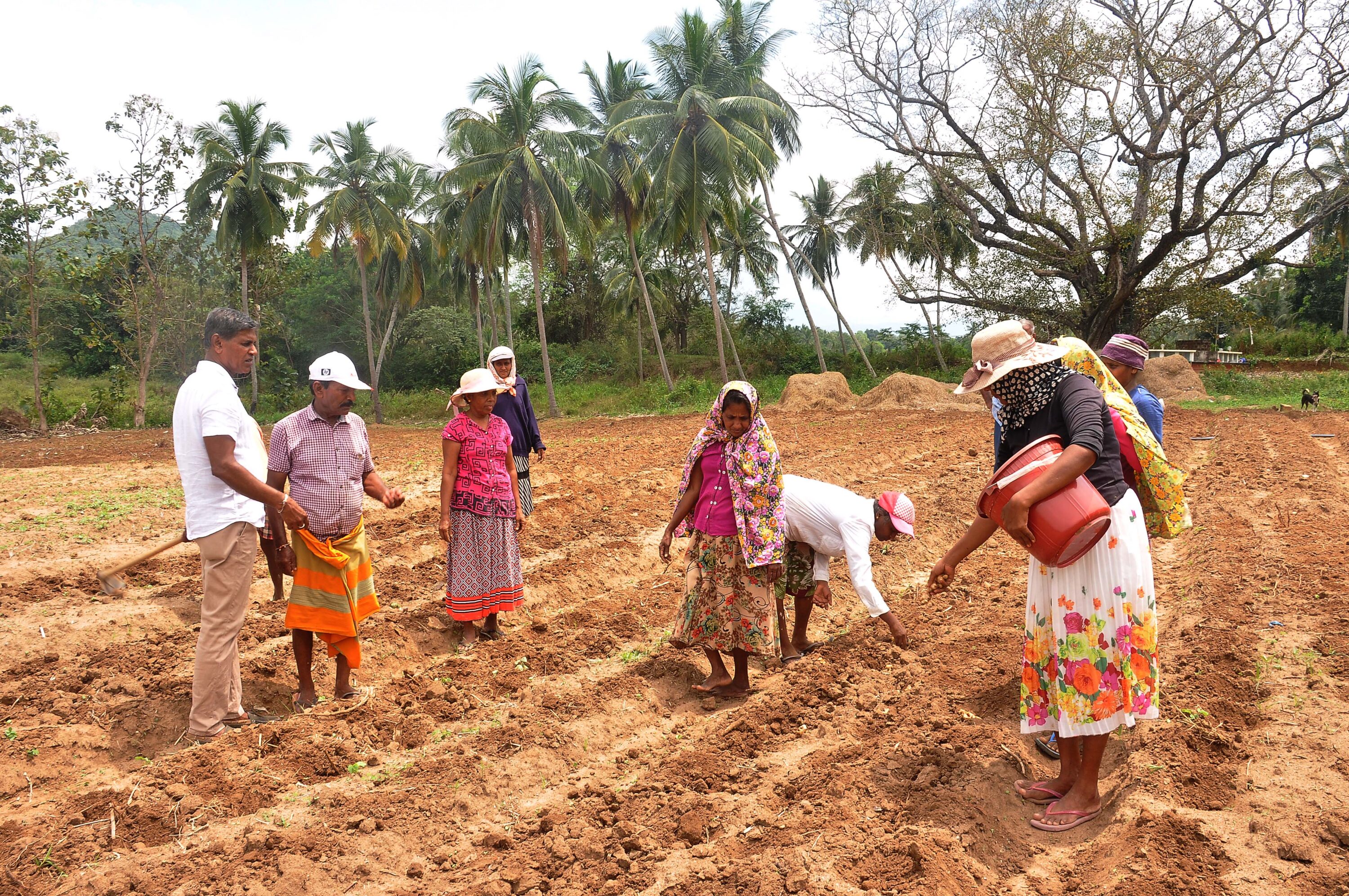
Planting material: Matured lateral rhizomes are the most suitable planting material. Piece of rhizome should be 30-40g in weight. Planting material should be free from pest & diseases and selected from a high yielding cultivation. Before planting seed rhizomes should be treated with a fungicide (Mancozebb80 % WP 30g/10Lwater) for about 30minutes to avoid fungal growth during planting.
Field Planting
Ginger is planted in raised beds or on ridges. Field should be ploughed up to 35-40cm in depth and tilling soil is done. Beds are 105cm in width and length is vary width the space available. However when inter cropped with coconut width and length can be changed according to the available space. Height of the bed is about 22cm and a drain, with 45cm in depth should be prepared in between beds.
Spacing
Planting depth – 4-10cm
Ginger Bed Preparation
Planting should be done after the rain. If no adequate moisture beds should be irrigated.
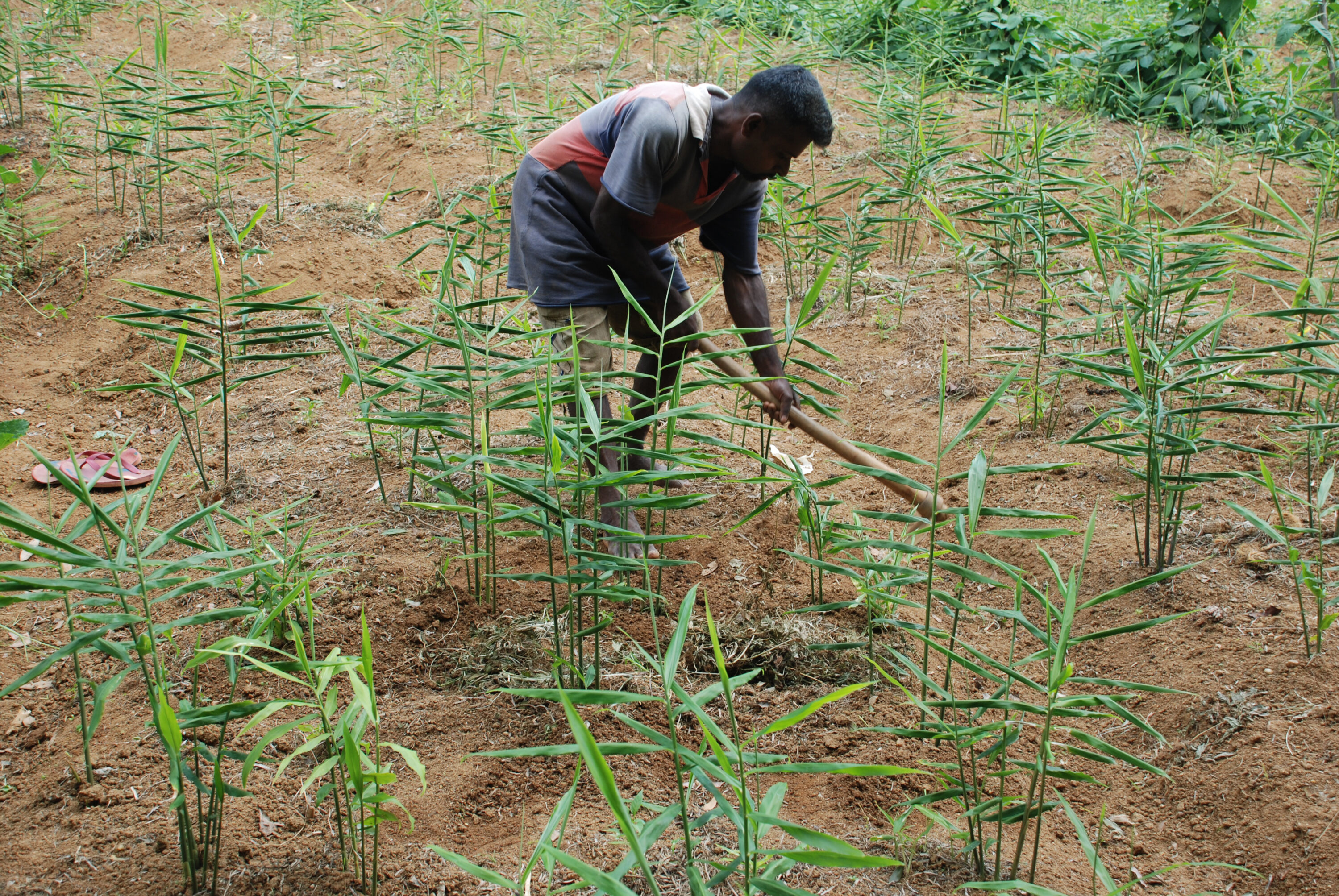
Mulching : To protect moisture and to keep weeds under arrest mulching should be done immediately after planting. Straw, coir dust, dry leaves or coconut leaves are most suitable mulching material.
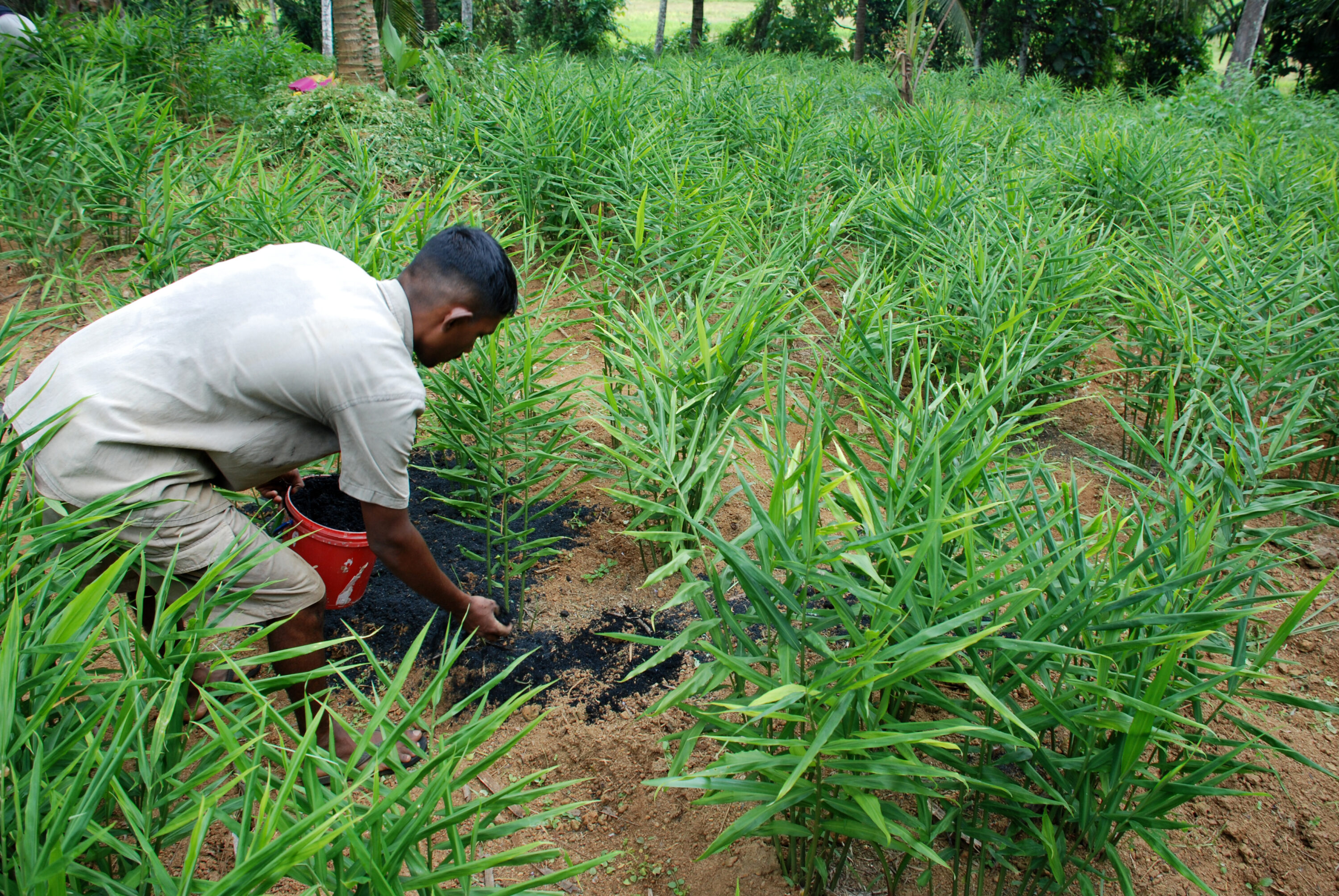
Fertilizer application : To add adequate Ca and Mg dolomite is mixed with the soil immediately after ploughing at the rate of 2 mt./ha. To get a higher yield saw dust ash also added to the soil at the rate of 3-4kg/sq, meter of the bed during land preparation period.
Table 01 : Fertilizer recommendation
Time | Organic fertilizer | Urea(kg) | TSP (kg) | MOP (kg) | |
Basal | At the time of planting | 20 mt | 100 | ||
1st application | After 01 months | – | 82 | 42 | |
2nd application | After 03 months | – | 82 | 42 |
Table 02 : Fertilizer recommendation for 3 ½ x10 plot (grams)
Time | Organic fertilizer | Urea(g) | TSP (g) | MOP (g) | |
Basal | At the time of planting | 10-12kg | 50 | ||
1st application | After 45 days | – | 41 | 21 | |
2nd application | After 90 days | – | 41 | 21 |
Fertilizer is applied after weeding and should be mixed with the soil. After that beds should be mulched. Fertilizer is applied with rain or should be irrigated after fertilizer application. In addition glyricidia leaves can be added as an organic fertilizer and thereby can cut down the need of chemical fertilizer and to protect the soil moisture.
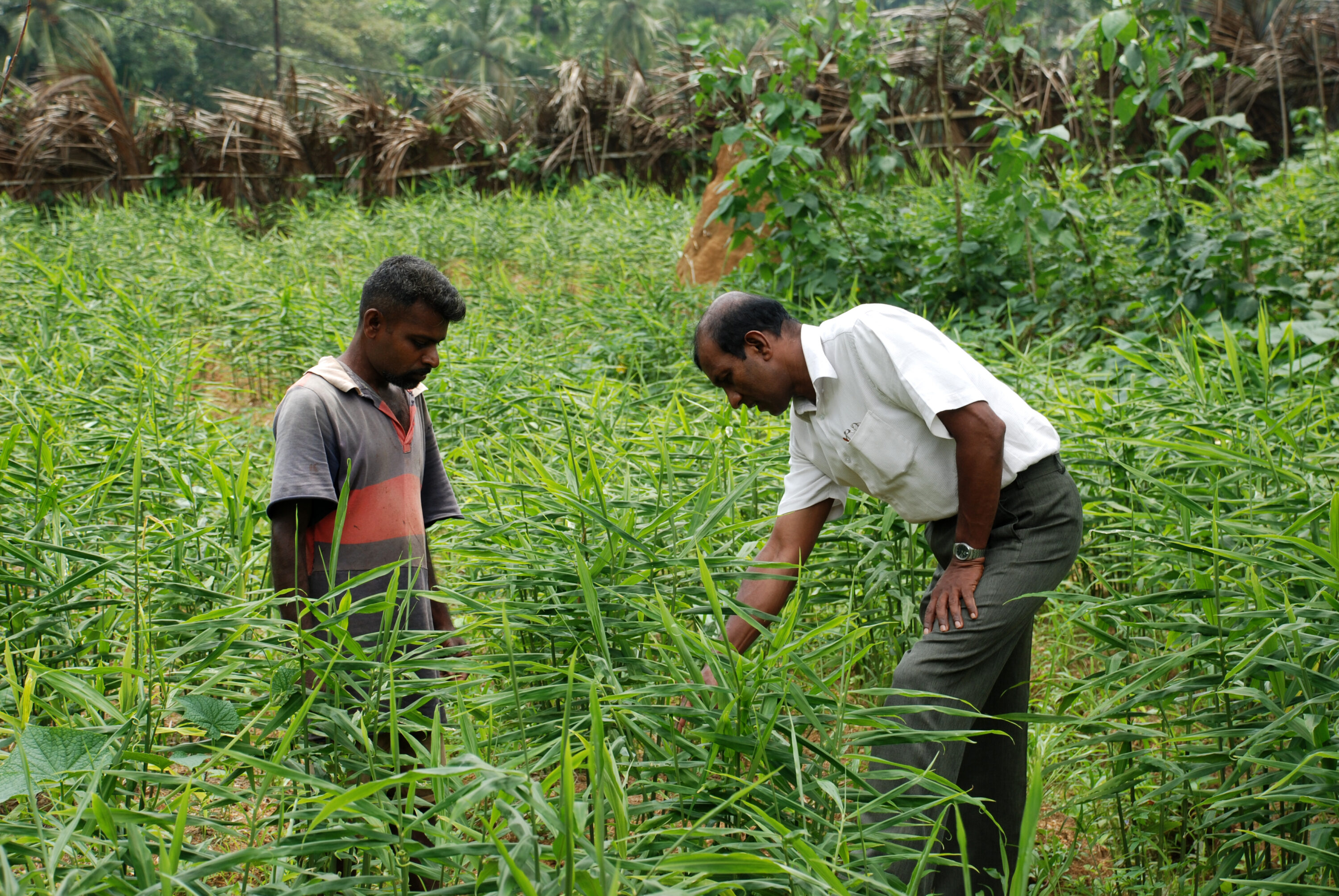
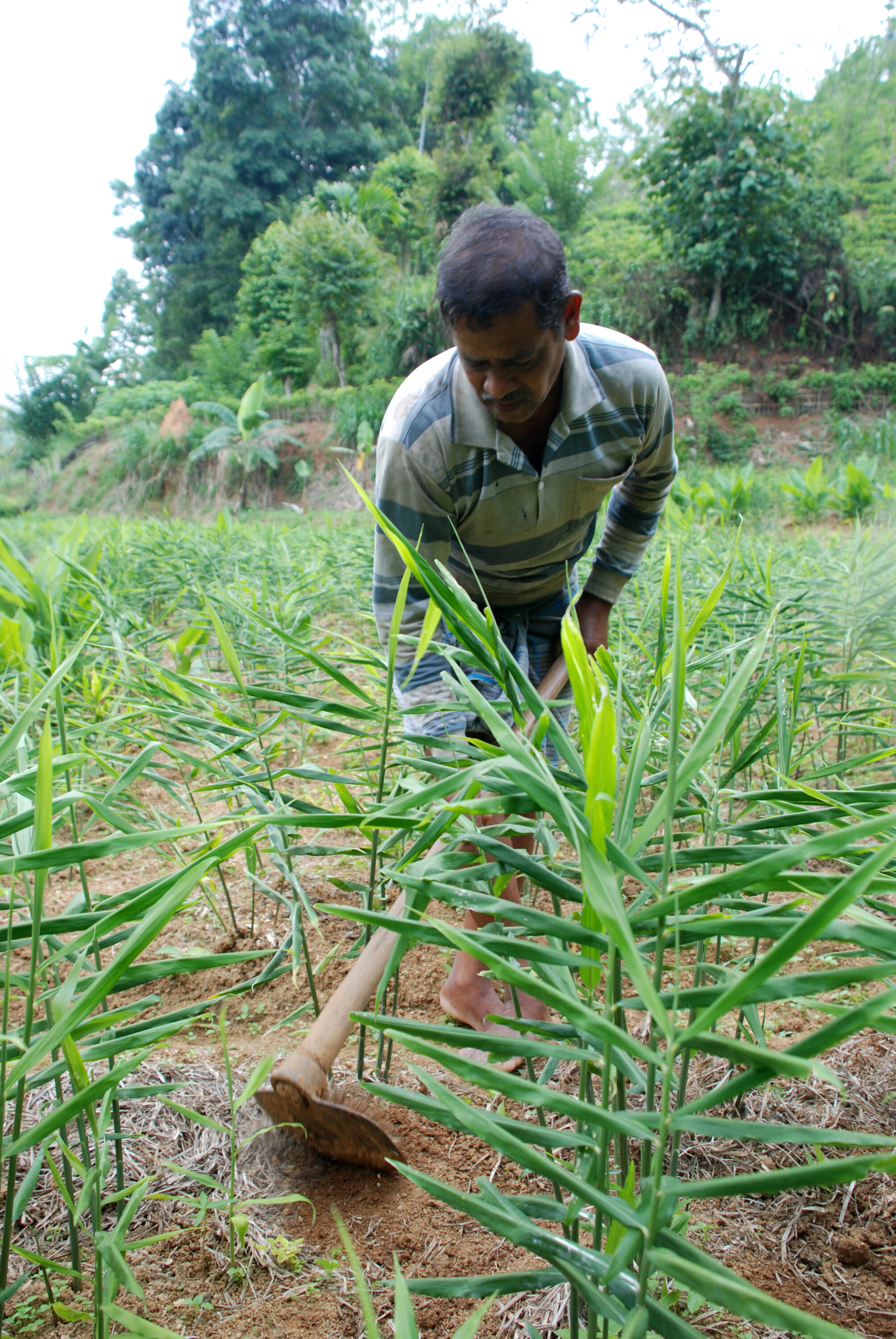
Weeding : Weeding has to be done after one month of planting. The second weeding is done after three months of planting and the beds should be mulched again to protect the moisture. Cleaning drains and earthling up also done with the weeding.
Causal organism – Pythium Spp
Symptoms
Control
Causal organism: Ralstonia solanecearum
Symptoms:
Non-chemical control methods
Chemical control methods
Causal organism: Phylosticata zingiberi
Symptoms
Control
Stem Borer Dichocrocis puncitiferalis
Control
Scale insect : Aspidiella bartil
Control
Ginger harvesting
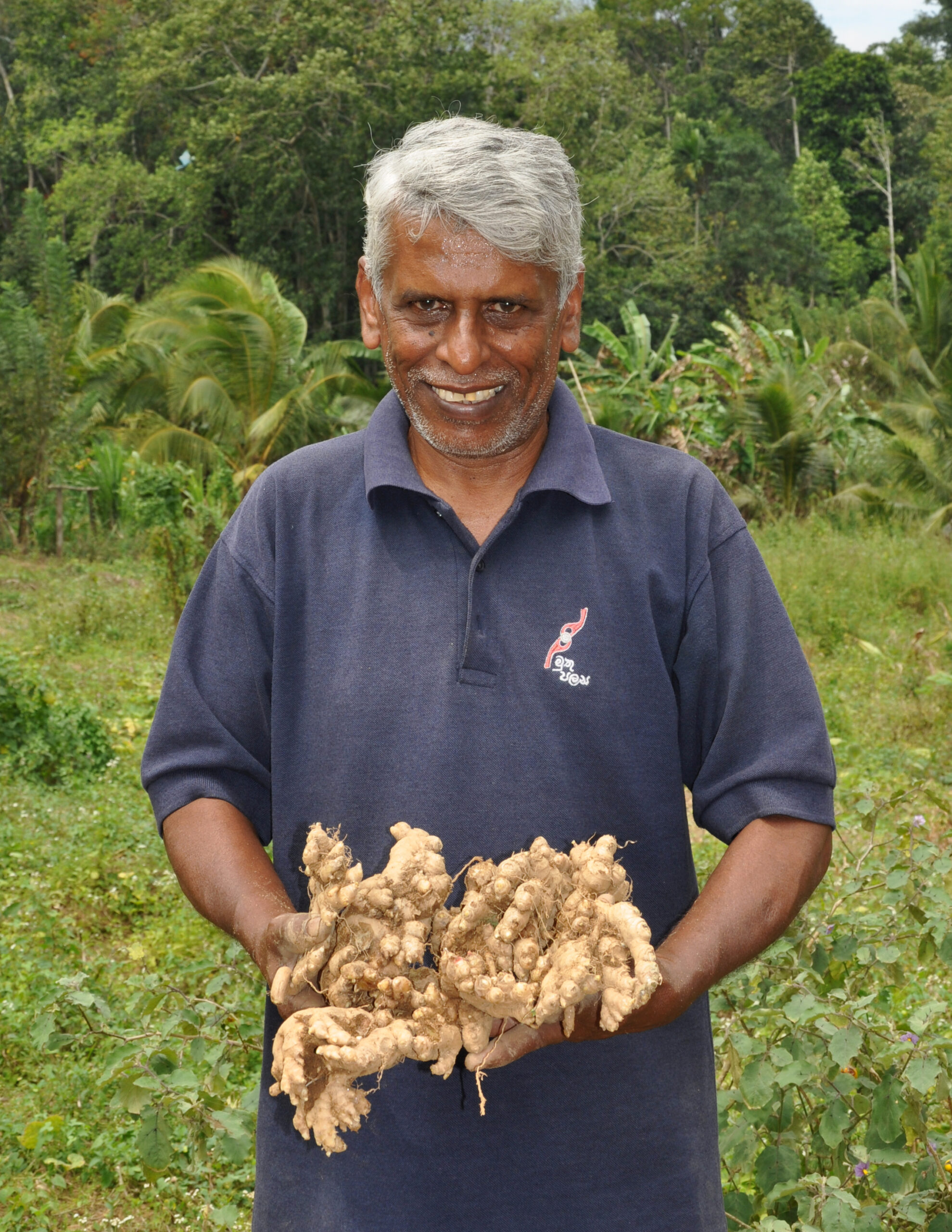
Harvesting is done after 8-10 months of planting. If planted in March-April Season, ginger is ready to be harvested by December – January. During that time plants become yellow in color and start leaves drying. Harvesting is done with care not to damage rhizomes and attached soil clusters should be removed with a wooden stick.
Ginger processing
The basic activities of ginger processing are washing, peeling and drying.
The rhizomes should be washed well removing sand in between the fingers. Ginger can be dried for one day and placed in polypropylene lined poly -sack bags to be issued to the market as raw ginger.
Ginger rhizomes should be soaked in water for one night and the outer skin can be removed carefully
Peeled ginger should be dried for about one week until the moisture percentage is 12%. Dried ginger can be stored in a polypropylene lined poly sack bag.
Value added products
Preserved ginger products
It is proven that man has used ginger as a medicine in the past. In many Ayurvedic remedies Ginger is a main commodity. Not only for common flue but it also works for high blood pressure and as an antidote for cancer.
Promotes improved processing and links farmers with exporters.