Clove
Syzygium aromaticum L.
Family : Mertaceae
History
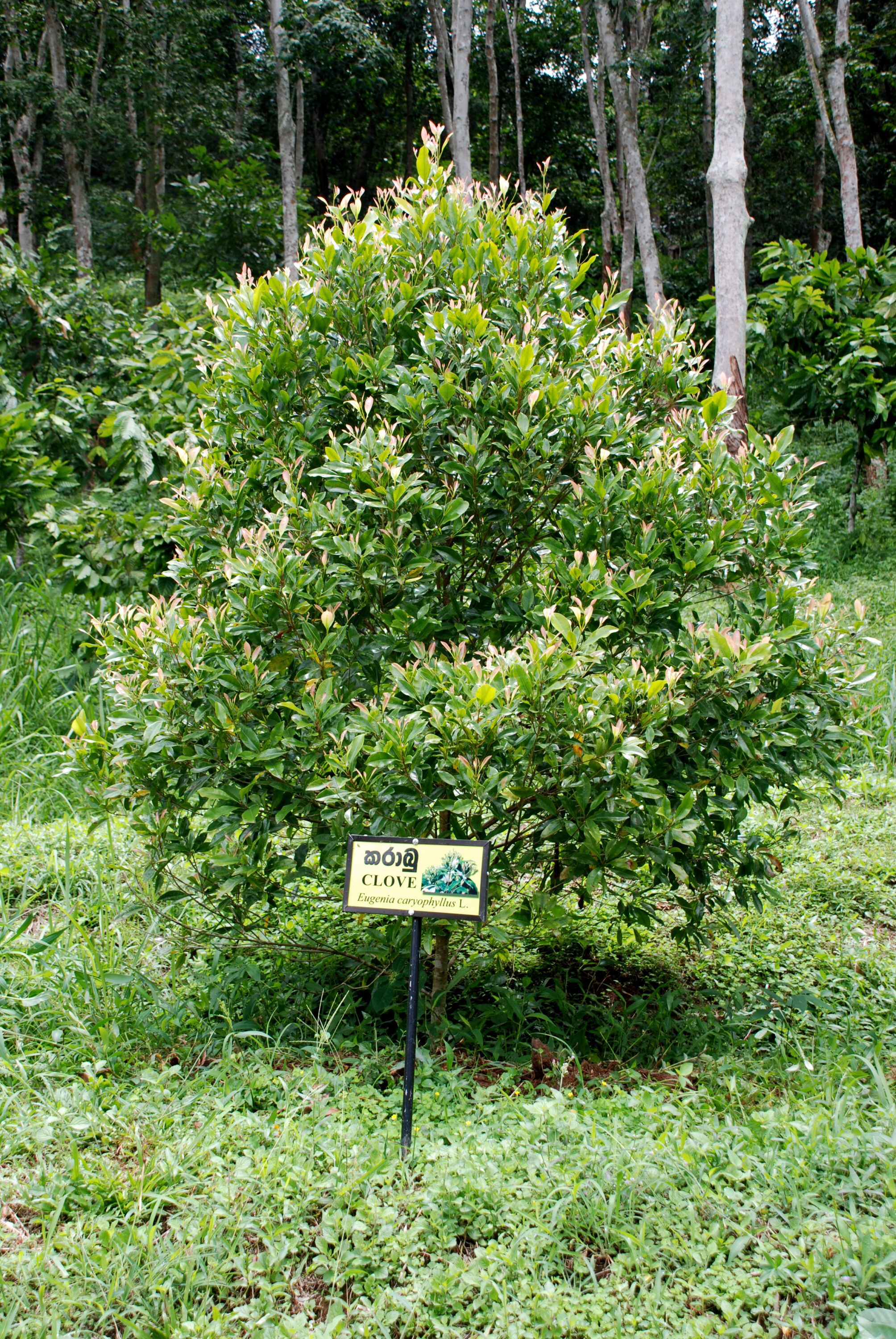
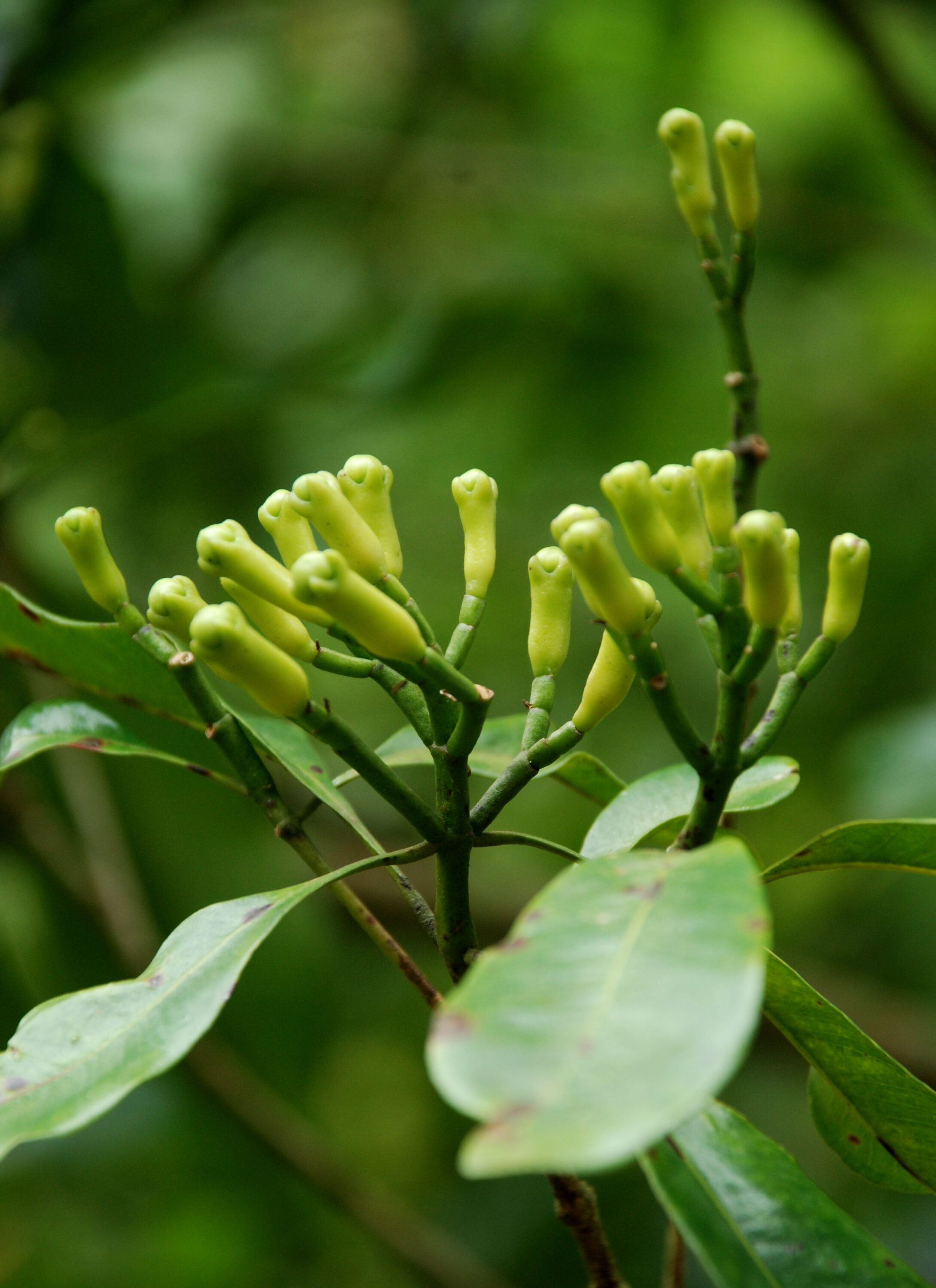
The clove tree is a medium sized symmetrically shaped tree with smooth grey bark canopy has a cone shape. Fully matured trees grows upto 15 -20m. It is believed to be originated in Maluku Islands in Indonesia. Clove along with nutmeg and pepper were highly prized in Roman Era. Cloves were traded by Arabs in the Middle ages but in the 15th century Portugal took over the trade. The Portuguese brought large quantities of cloves to Europe mainly from Malku Islands and valued it at seven grams of gold per kg. Later the Spanish then the Dutch dominated the trade till the seventeenth century. The French introduced clove to Mauritius in the year 1770 subsequently the cultivations were introduced to Guiana, Zanzibar, West Indies and most of the Brazil. It is not known how and when clove was introduced to Sri Lanka but may be the Arab traders or Colonial rulers may have brought the plant to the country as Sri Lanka was a major trading hub for spices during that time.
Products and Uses
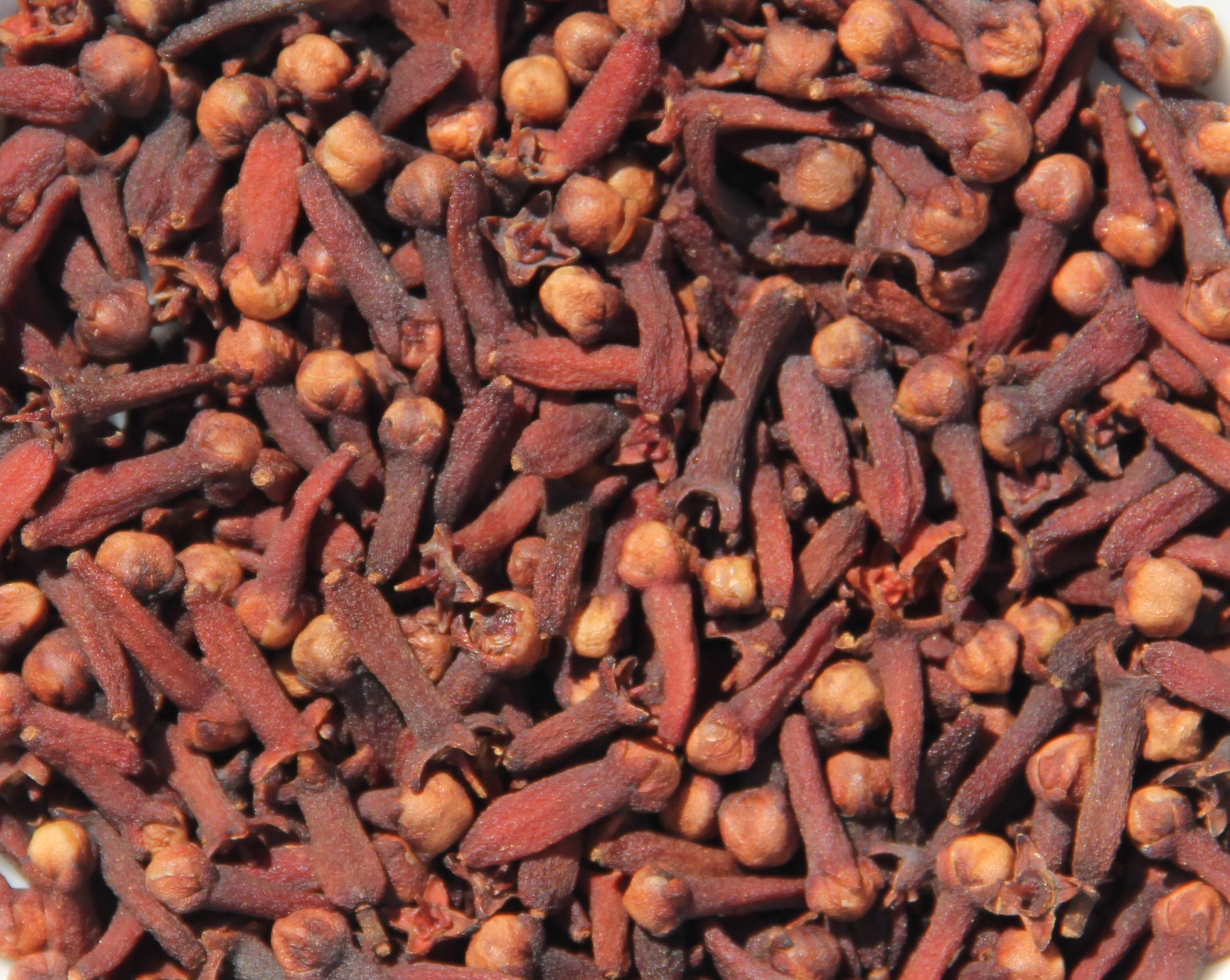
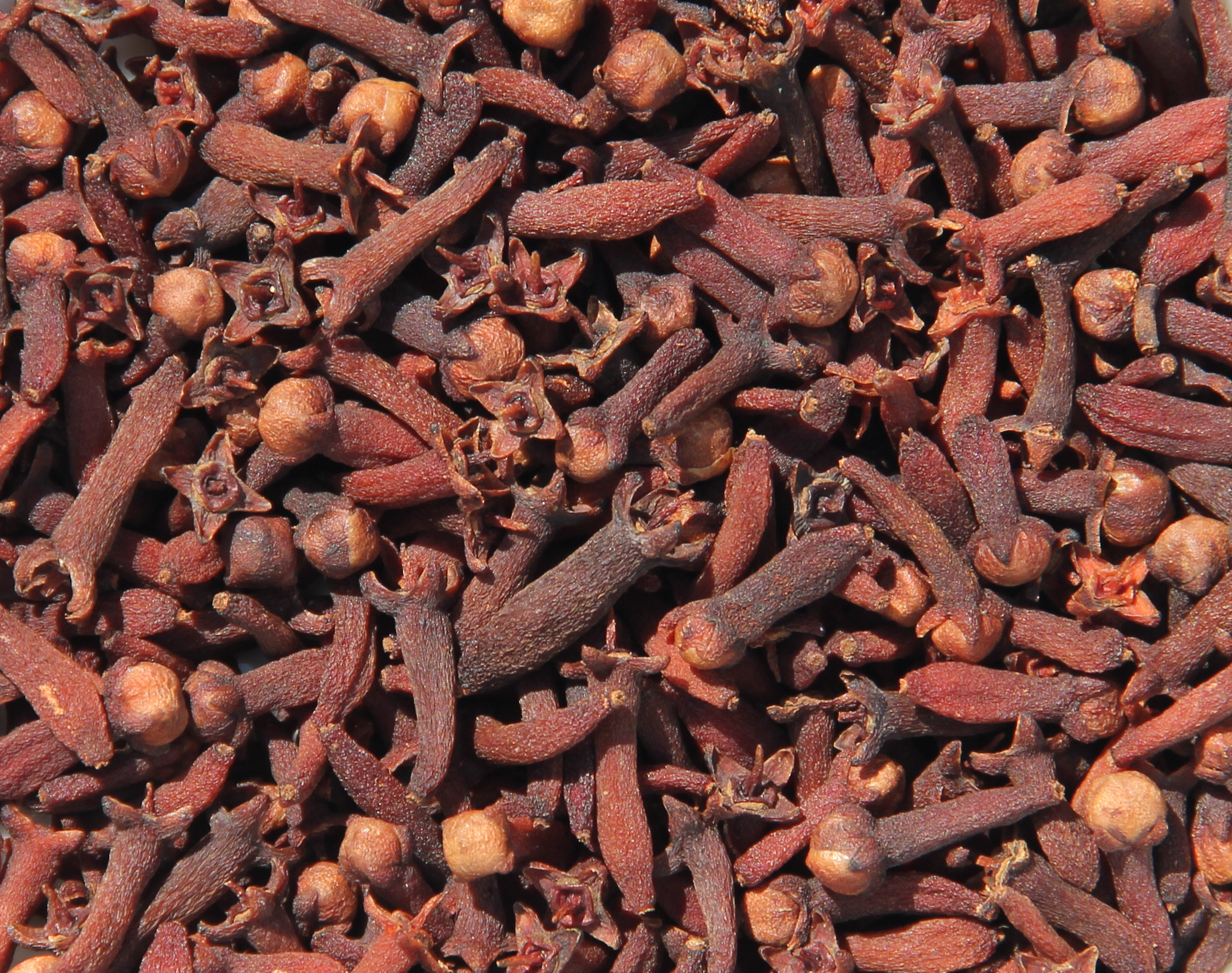
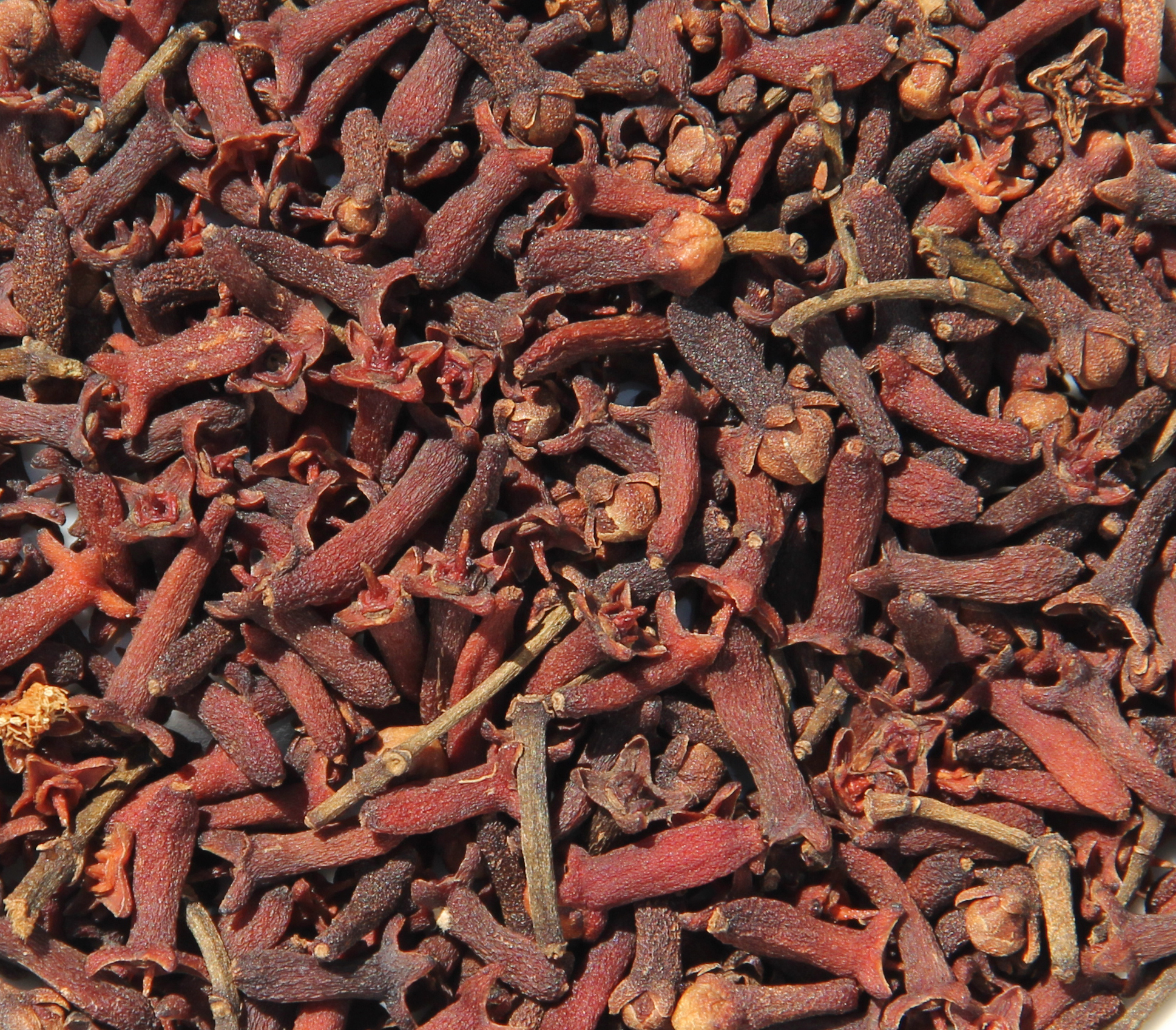
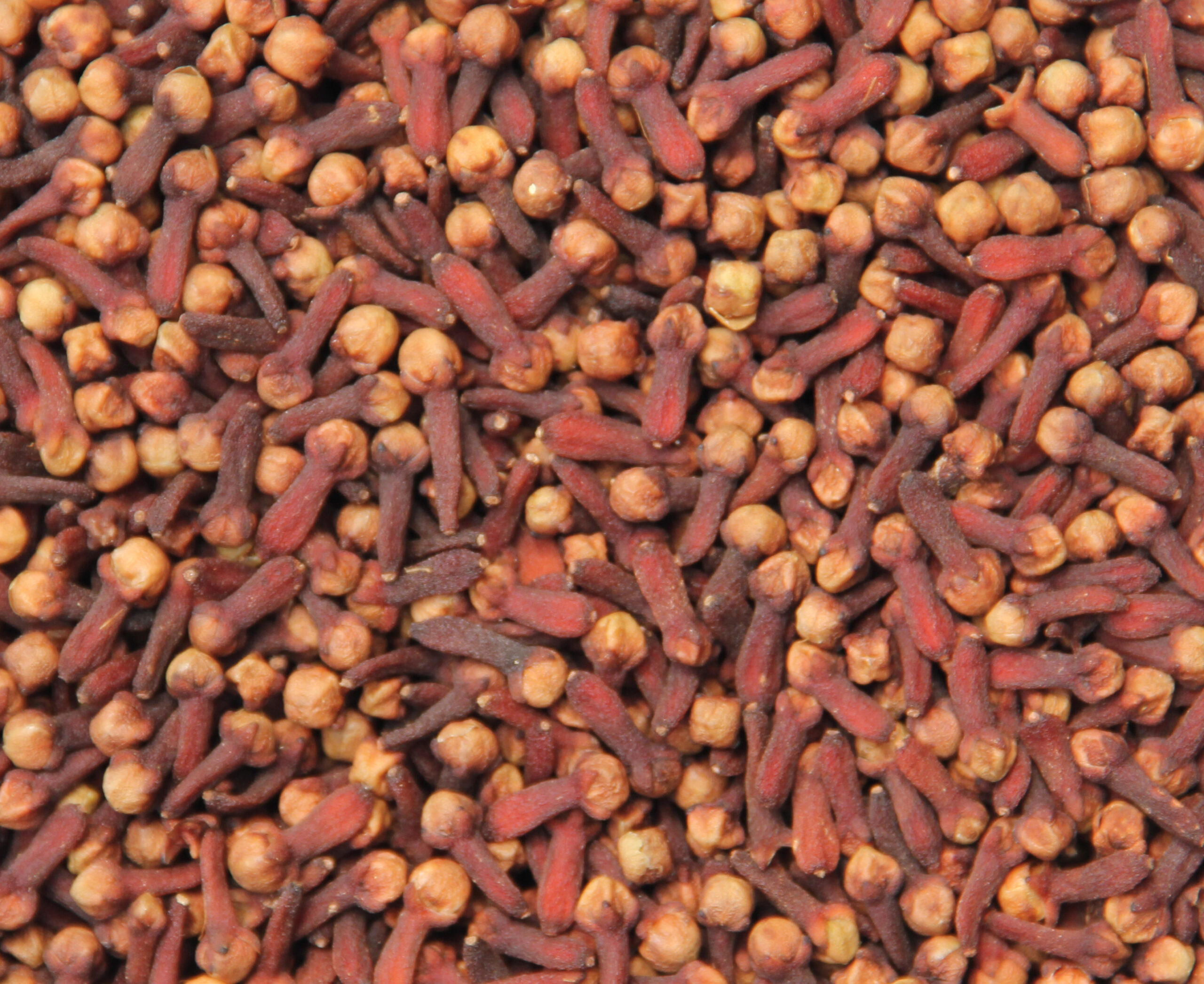
Clove is largely used as dried whole buds. Ground clove is used for curry mixtures and clove oil is used for flavoring foods and in pharmaceutical perfumery industry. Clove oil either can be colourless or yellow. If exposed to sunlight it may turn into dark colour. Cloves are used either whole or ground to provide flavor for both sweet and savory foods in pickling and the production of sauces and ketchups. In medicine it is valued as a carminative, aromatic and stimulant. It is being used in cigarette industry as a flavoring agent. Clove oil is used in perfumes, in dentistry and a clearing agent in microscopy.
Major Growing Areas
Clove is mainly grown in Mid Country wet zone of Sri Lanka. Total extent of clove is 7618ha. and Kandy, Kegalle and Matale districts are major growing areas.
Varieties
No specific varieties have been identified. However there are trees produce bigger size clove buds which are called as “Bothal Karabu”.
Soils and Climatic needs
Soil
Clove thrives well in a variety of soils. Deep and rich loams with high humus content are best suited for the crop. It also grows satisfactorily on laterite soils. Pure sandy soil is unsuitable for this crop. Clove does not tolerate water logging and therefore land selected for this crop should be well drained.
Climate
Clove grows well in a humid tropical climate from sea level up to 1000m elevation.
An average rainfall of 1750- 2500mm. per annum is sufficient. It is however, necessary that dry periods alternate with moist ones for good flowering
The annual average temperature should be 20 ˚C – 28 ˚C without much seasonal and diurnal variation. Persistent strong winds are harmful.
Shade is essential during the first two or three years of growth. Thereafter full exposure to light is beneficial.
Crop establishment
Planting material
Clove is propagated through seeds. Tree ripe fruits should be sown immediately since the viability of seeds is rapidly lost within 48 hours of collection. Seeds obtained by removing outer pulp by soaking in water. show early and uniform sprouting. The shade dried seeds are sown in perforated polythene bags consist of equal parts of well decomposed farm yard manure, top soil and coarse sand. The size of the polythene bags may vary from 10 Χ 20cm to 25 Χ 40cm depending on the time kept in nurseries before field planting. Bigger plants (15-20months) establish better in the field. Field planting: Spacing: 20’Χ20’(250 plants/ha) Temporary shade for 2-3 years is necessary. Artificial shade for newly established plants may be required during sunny seasons. Whenever possible ground cover crops such as leguminous sps, which do not compete with clove, should be established as a soil conservation measure.
Crop management
Fertilizer application
Recommended mixture – 625 kg / ha at the 10th year and after (density 250 plants/ha)
Components of the mixture | Parts by weight | Nutrients in the mixture |
Urea (46% N) | 2 | 13% N |
Rock Phosphate (28% P2O5) | 2 | 8% P2O5 |
MOP (60% K2O) | 3 | 25% K2O |
Kieserite 24 % MgO | 1/3 | 1% MgO |
Rate of fertilizer application
Year | Maha season (mixture g/ plant) | Yala season (mixture g/plant) |
1 | 120 | 120 |
2 | 250 | 250 |
3 | 375 | 375 |
4 | 500 | 500 |
5 | 625 | 625 |
6 | 750 | 750 |
7 | 875 | 875 |
8 | 1000 | 1000 |
9 | 1125 | 1125 |
10 year onwards | 1250 | 1250 |
Crop Protection
Pests
1.0 Stem borer
Infect the main stem of young trees at the basal region. The larvae of the pest griddles the stem and bores the downward into it. Griddle portion and bore hole is covers with a mat like frass material. The infected trees wilt and succumb to the pest attack subsequently.
Damage for the more than 20 year old trees. Pin head size small holes on the surface of the stem and frass come out from come out from that small holes due to internal feeding of larvae. Yellowing and dying of plant or branches due to blocking of translocation.
Management
Chemical mixed with water 1:1 Eg: Fipronil
Drill the stem in angle, make hole about 1cm from 30 to 60cm from the base and apply the chemical solution to the hole.
Repeat after two weeks
2.0 White grub
Anomala and Holotrichia sp damage to the plants. Larvae feed the roots (near the soil surface) and bark of the basal stem of plants. Plant show yellowing of leaves and later dying.
Management
3.0 Scale insect ( Planococcus sp)
Suck the cell sap from tender leaves, shoots. Sooty moulds fungus is observed on leaves due to honey dew secretion of insects.
Management
Fipronil 50g/L SC – 5 ml in 10L of water.
Thiomethoxam 25G – 5g in 10L of water
Diseases
Clove leaf fall disease
The disease symptom consist of reddish brown spots on mature and immature leaves, buds and stalls. Formation of reddish brown patches by coalescing of spots. Defoliation (mature and immature leaves) bud falling and in the severe cases occurrence of die back.
The occurrence of disease is common in all the stages of plants, nursery plants as well as all the ages of trees are affected by the disease. Causal organism : Cylindrocladium sp
Control measures
Application of either one of the following chemicals is recommended.
Chemical | Rate of application | Duration of application |
Carbendazim 50% (w/w)wp350ppm | 7g/10L water | 3 times at 2 week interval |
Thiophanate methyl 70%420ppm | 6g/10L water | 3 times at two week interval |
Harvesting and Post Harvest practices
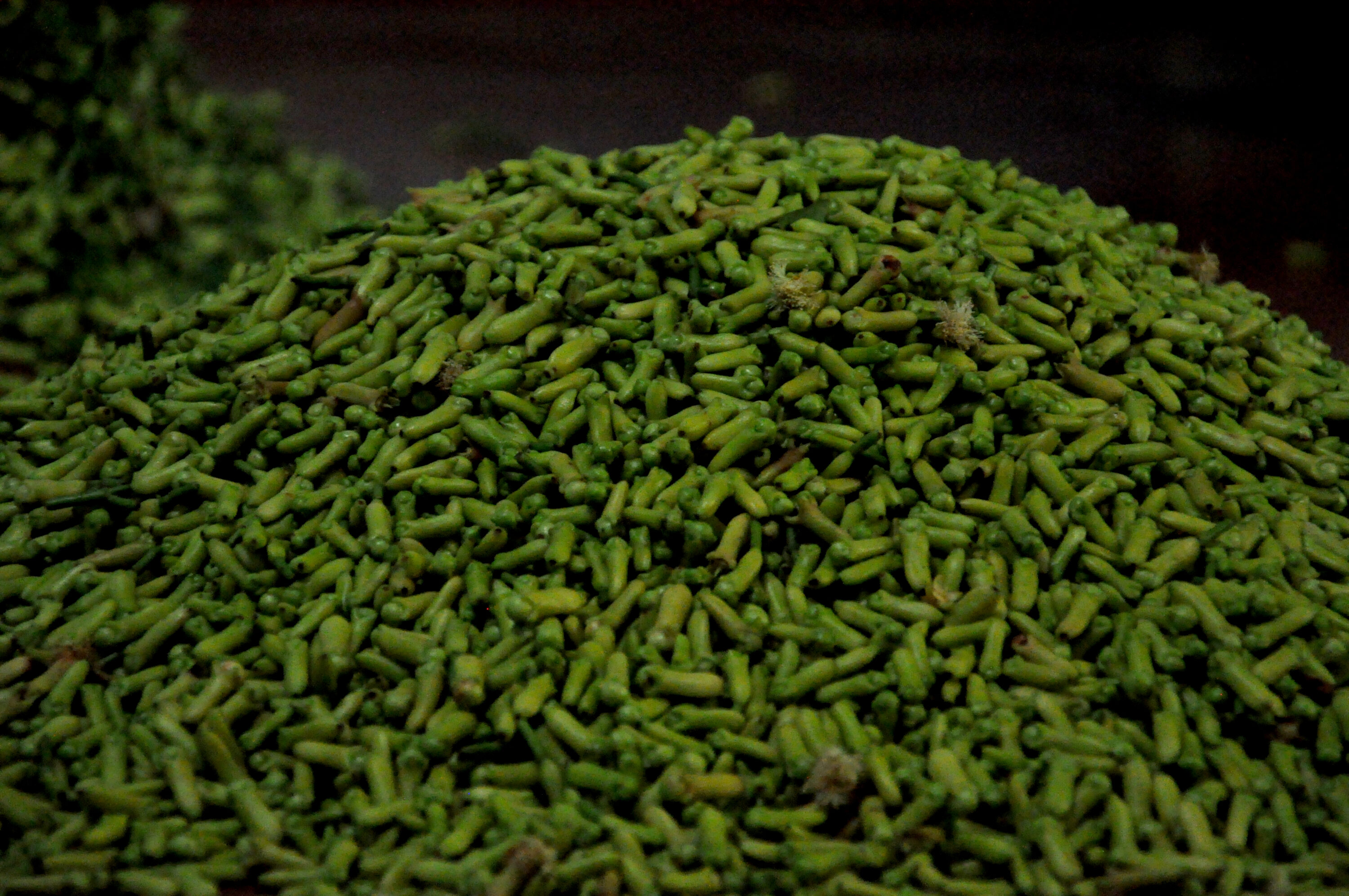
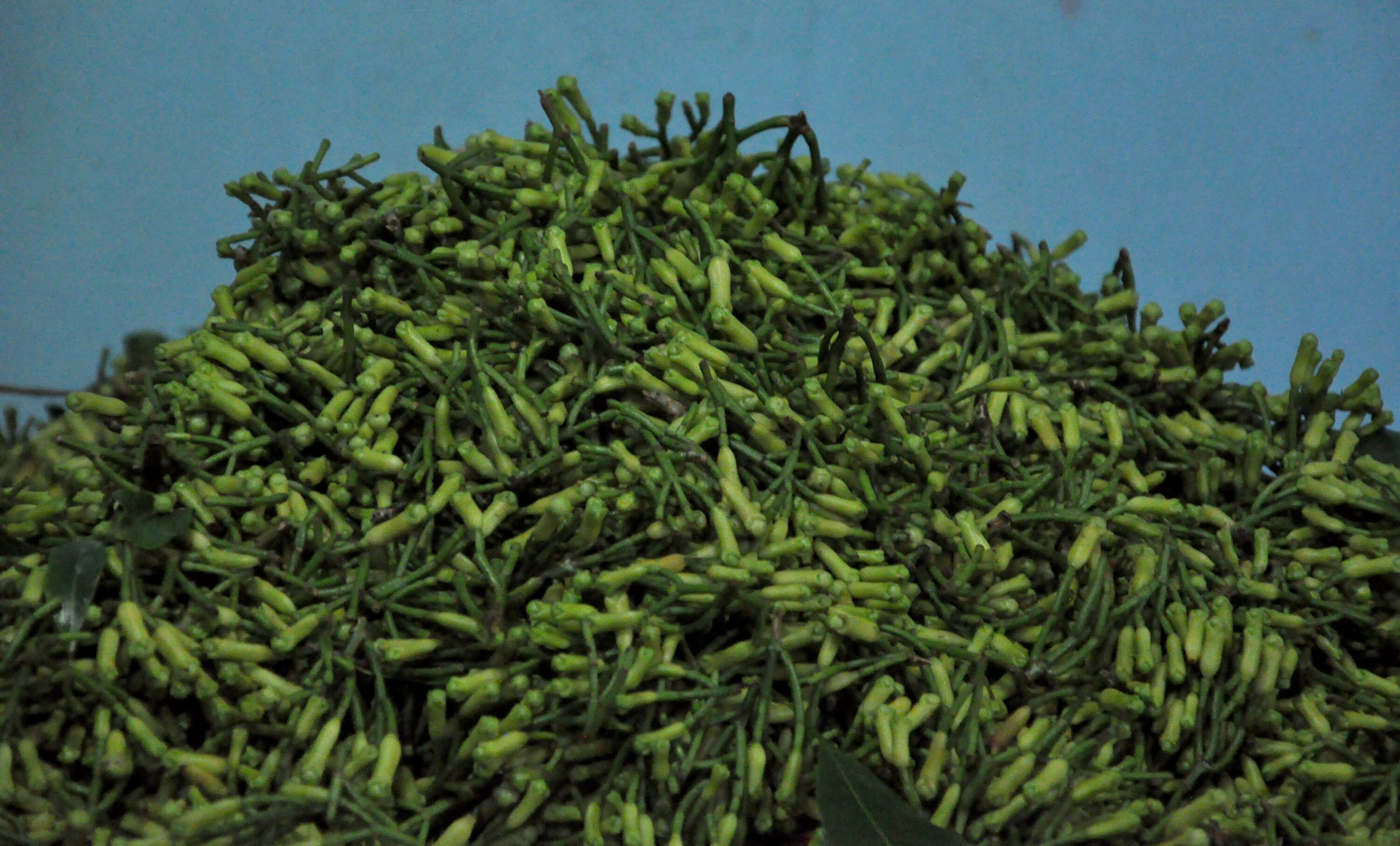
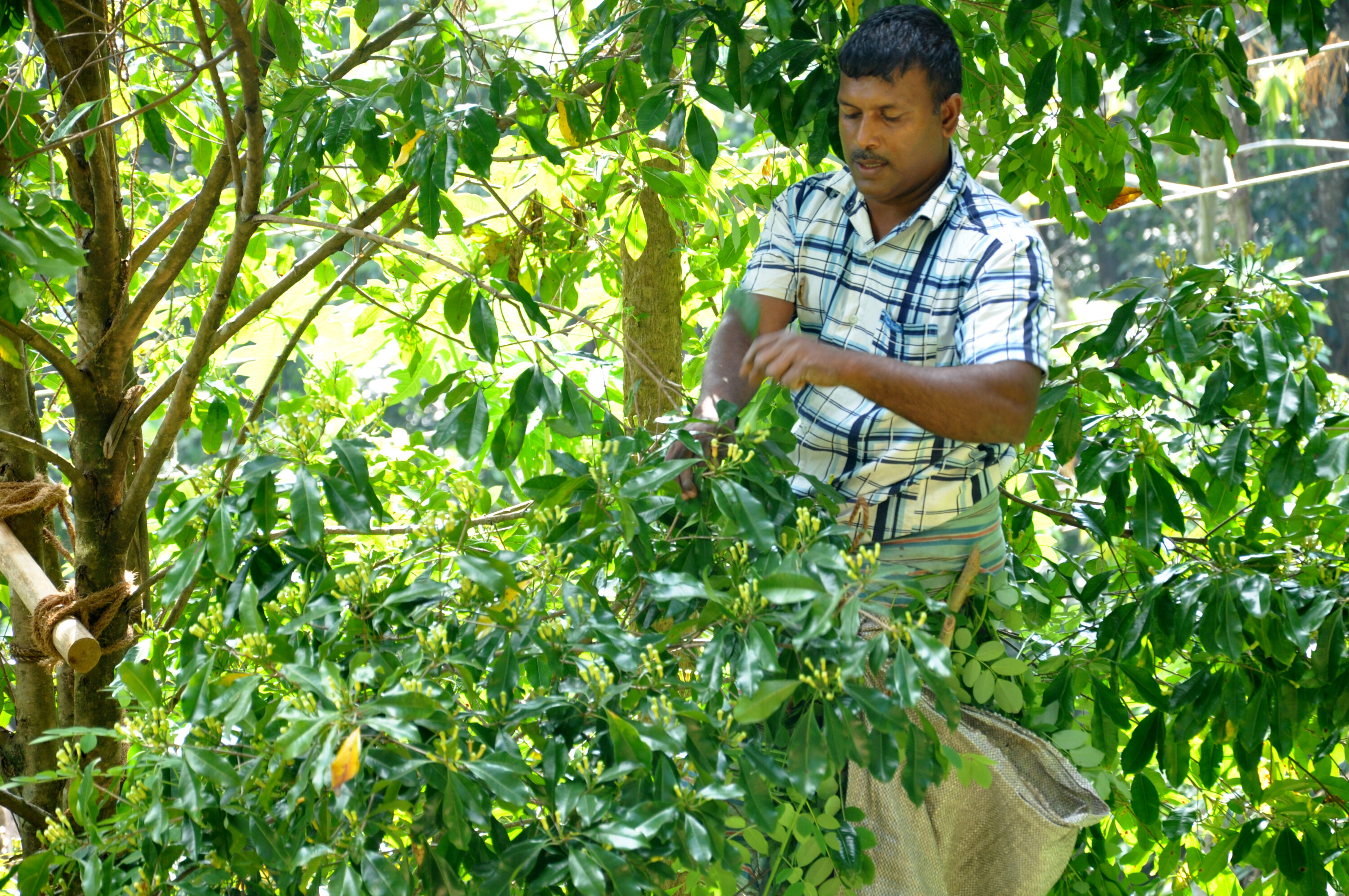
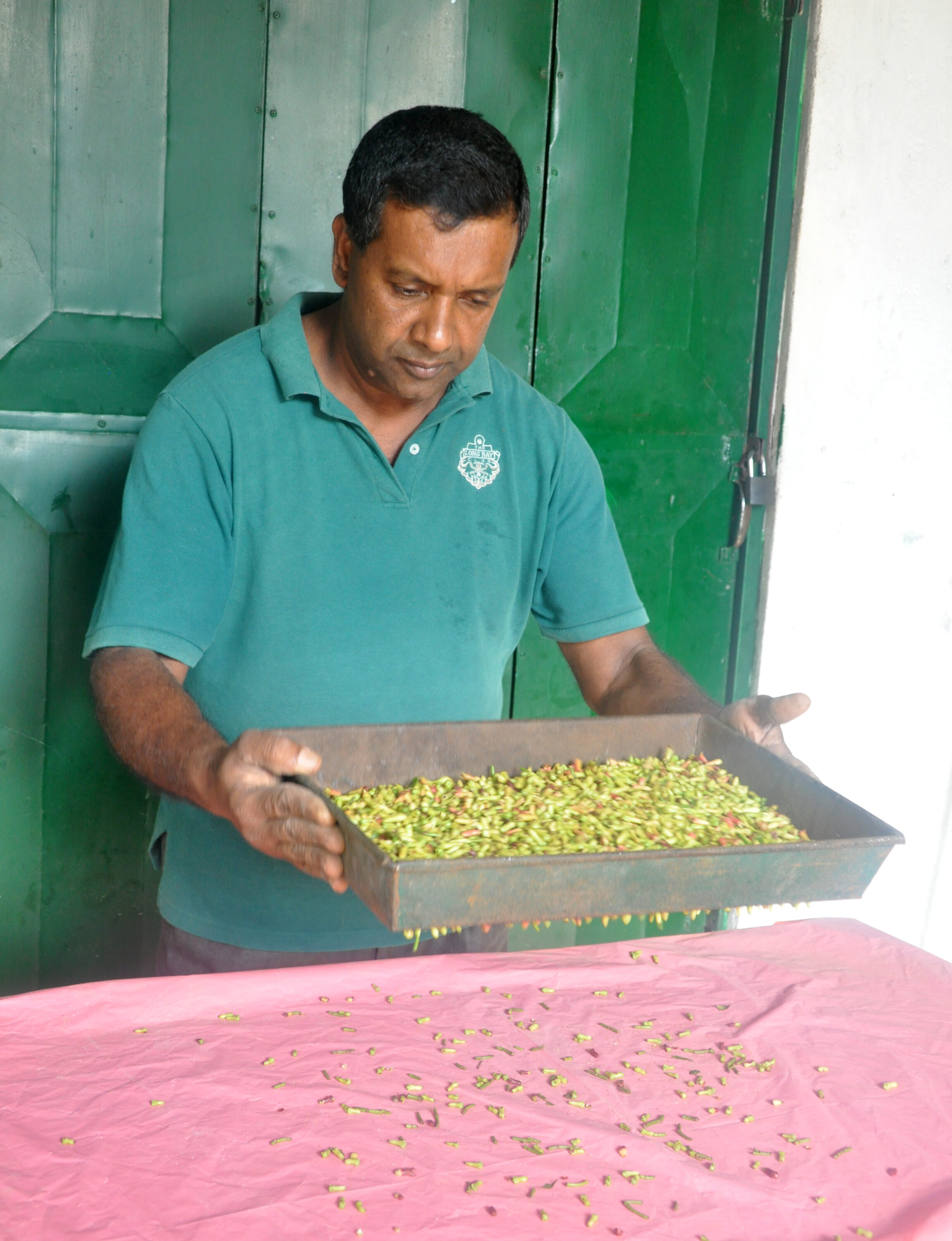
Harvesting The right stage of harvesting clove buds is when flower petals change their colour from olive green to yellow pink. Clusters of flowers are harvested together with the stalks. The harvesting season commences usually in December and extends up to the end of April depending upon the locality. The average yield of dry cloves in Sri Lanka is about 250kg/ha.Under good management conditions a yield of abut 850kg/ha can be obtained. Processing: The flower buds should be detached from the stalks and both buds and stalks are dried in sun or artificial drier until they become dark brown and hard. Well dried good quality cloves are in golden brown color and badly dried cloves are soft and pale brown with a whitish mealy appearance which are known as “khuker” cloves. Green clove buds of the right stage give about 30% dry cloves. Well dried cloves (8-10% moisture) can be stored in gunny bags without damage by fungus and insects for 1 or 2 years.
Standard quality specifications
The specifications given by the Sri Lanka Slandered Institute is as follows.
| Gr 01 | Gr 02 | Gr 03 |
Khuker cloves max. % by mass | 3 | 5 | 10 |
Cloves below 10mm length max % by mass | 15 | 25 | NA |
Extraneous matter max % by mass | 1 | 2 | 3 |
Moisture max. % by mass | 12 | 12 | 14 |
Medicinal and Chemical Properties
Eugenol comprises 72-90% of the essential oil extracted from cloves and the compound is most responsible for the aroma of cloves. Other important essential oil constituents of clove oil include acetyl eugenol, beta-caryophyllene and vanillin, crategolic acid, gallotannic acid, methyl salicylate, eugenin, kaempferol, rhammentin, eugenitin, oleanolic acid, sigmasterol and campesterol. Clove is used in Indian Ayurvedic medicine, Chinese medicine, western herbalism and in the dentistry, where the essential oil is traditionally used as an anodyne (painkiller) for dental emergencies. Cloves have carminative effect to increase hydrochloric acid in the stomach and to improve peristalsis. Clove oil is used in various skin disorders like acne, pimples etc. and also used in skin burns , skin irritation and sensitiveness of skin.
Planting material
The shade dried seeds are shown in sand beds. (width 90cm, deep 15cm). After 10 days remove the seedlings and plant inpolythene bags.
Field planting
As a mono crop: Size of planting hall 75X75X75cm. spacing 6X6 m.
Intercropping with coconut
Single row : spacing 6m between two plants.
Intercropping with tea:
Single row: spacing 12m between two plants.